

Under the guidance of the Greater Bay Area Industry-Education Alliance and the National Industry-Education Integration Community for Network and Software Security, the 2025 International Conference on Information Engineering, Intelligent Information Technology and Artificial Intelligence (IEITAI 2025) was inaugurated at Harbin Institute of Petroleum. The conference was jointly organized by the Heilongjiang Provincial Artificial Intelligence Society and Harbin Institute of Petroleum, and hosted by the Computer Applications Committee of the Heilongjiang Provincial Computer Federation.
Distinguished guests gathered at the conference, including Academician Wang Jiangzhou (Professor at Southeast University, member of the Chinese Academy of Engineering), Professor Chen Biaoxin (Chairman of the Greater Bay Area Industry-Education Alliance and Vice President of Guangdong University of Science and Technology), Wang Yining (President of Harbin Institute of Petroleum), Feng Yan (Vice President of Harbin Institute of Petroleum), Professor Kang Shouqiang (Vice President of Northeast Petroleum University), Professor Nikolaos M. Freris (University of Science and Technology of China), Professor Zhan Dechen (Harbin Institute of Technology), Professor Wang Zhijun (Peking University), Professor Cai Chengtao (Harbin Engineering University), Professor Li Yang (Northeast Forestry University), Feng Zhiyong (Secretary-General of the Heilongjiang Provincial Artificial Intelligence Society), and Professor Zhu Jiamei (Dean of the School of Information Engineering, Harbin Institute of Petroleum). Over 400 representatives from universities, enterprises, and associations came together to engage in in-depth discussions on theoretical breakthroughs and industrial applications in fields such as information engineering, artificial intelligence, big data, the Internet of Things (IoT), and 5G/6G communications. The conference was chaired by Professor Feng Yan, Vice President of Harbin Institute of Petroleum.
I. Opening Addresses: Discussing Technological Transformation, Building Consensus for Collaboration
During the opening address, Wang Yining, President of Harbin Institute of Petroleum, extended a warm welcome to the attending experts, scholars, engineers, and industry representatives from both China and abroad. She noted that the world is currently at a critical confluence of a new round of technological revolution and industrial transformation. Emerging technologies such as AI, big data, IoT, and 5G/6G communications are accelerating their evolution, profoundly reshaping social production and lifestyles while serving as core drivers for regional economic transformation and upgrading. As a major traditional industrial base in China, the Northeast region faces both strategic opportunities and practical challenges—such as gaps in technology and talent—during its transition toward a digital economy and intelligent manufacturing. “The convening of IEITAI 2025 is especially timely,” Wang emphasized. She expressed hope that the conference would serve as a bridge to deepen multidisciplinary integration and industry-university-research collaboration, pool global intellectual resources, jointly chart the development path of intelligent information technology and artificial intelligence, and inject new momentum into social progress and high-quality regional economic development.

In his address, Professor Kang Shouqiang, Vice President of Northeast Petroleum University, remarked that emerging technologies such as information engineering, AI, big data, IoT, and 5G/6G communications are not only drivers of new economic growth but also forces reshaping social production models, lifestyles, and educational structures. He expressed three goals for the conference: first, to facilitate the sharing of research achievements and cutting-edge experience; second, to foster interdisciplinary and cross-sector deep cooperation, pooling intellectual strengths; and third, to build a platform for young scholars and students to showcase their work, exchange ideas, and be inspired to pursue excellence in scientific innovation and technological breakthroughs.

Professor Chen Biaoxin, Chairman of the Greater Bay Area Industry-Education Alliance and Vice President of Guangdong University of Science and Technology, noted in his address that the deep integration of information technology and AI is driving global industrial transformation and social development. There is an urgent need for efficient interaction and in-depth dialogue among industry, academia, and education. Industry-education integration, as a core pathway to bridge the gap between talent cultivation and industrial needs and to align research outcomes with market applications, has become a critical link connecting industrial change, talent development, and knowledge innovation. Chen stated that the Greater Bay Area Industry-Education Alliance will continue to aim for “expanding the cooperation network and building a collaborative ecosystem,” deepening partnerships with domestic and international educational institutions, leading enterprises, and industry associations to jointly explore new models and pathways for industry-education integration.

II. Keynote Reports: Highlighting Cutting-Edge Breakthroughs and Analyzing Application Directions
In the keynote session, several leading experts and scholars shared their latest research findings and practical insights on hot topics, including large AI models, the impact of AI on education, bio-inspired robotics, intelligent maritime technologies, and biological sequence analysis, offering a “feast of ideas” to attendees.
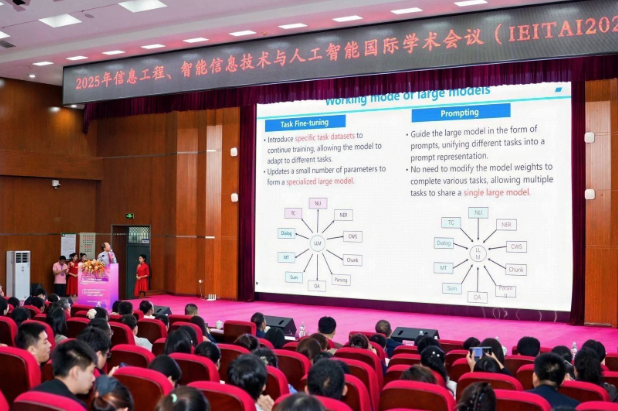
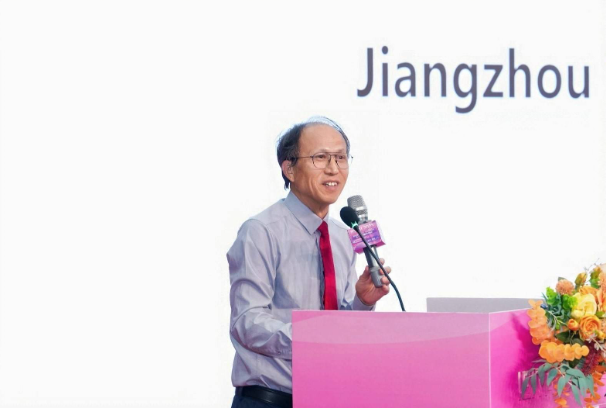
Academician Wang Jiangzhou (Professor at Southeast University and member of the Chinese Academy of Engineering) delivered a report titled “Reflections on Large AI Models.” He pointed out that large AI models have become a new frontier in global technological competition, reshaping human-computer interaction paradigms and driving a new round of industrial transformation. He noted that intelligent communication is seen as the future direction of next-generation wireless communications, but the application of traditional or small-scale AI in wireless communications faces many difficulties. Professor Wang introduced the development background and learning mechanisms of large AI models, sharing the latest research results through theoretical analysis and case studies. He revealed that these results will be applied to wireless communications, including multi-modal semantic communication and drone-assisted data collection, providing new solutions for wireless communication technology upgrades.、
Professor Zhan Dechen from Harbin Institute of Technology presented “The Impact of Artificial Intelligence on Computer Science Programs and Response Strategies,” focusing on educational transformation. He explained that against the backdrop of open-source large models such as DeepSeek, AI technology has triggered a new round of curriculum reform, not only driving structural adjustments in computer science programs but also forcing the upgrade of traditional program designs and course content. He pointed out that computer science programs are both a key component of traditional disciplines and foundational to the development of the “Four New” disciplines (new engineering, new medical science, new agricultural science, and new liberal arts). They need to preserve classic core courses while addressing the impact of emerging AI courses. Based on this, he elaborated on ideas for reforming computer science curricula and course systems in the AI-rich environment, guided by OBE (Outcome-Based Education) principles.

Professor Nikolaos M. Freris from the University of Science and Technology of China presented a report titled “Spirobots: Bio-Inspired Soft Helical Robots.” He explained that the research is inspired by the spiral motion mechanism of bacterial flagella in nature. By mimicking this efficient and adaptive movement pattern, his team successfully developed miniature robots with flexible helical structures. Professor Freris highlighted how smart materials and magnetic actuation technologies enable these robots to achieve precise motion and deformation in complex environments—without traditional motors or gears, they can perform directional movement and cargo transport in confined spaces. This demonstrates great potential for biomedical applications such as targeted drug delivery and minimally invasive surgery. He emphasized that Spirobots overcome the motion limitations of rigid robots and offer a new biomimetic paradigm for future soft robot design.

Professors Cai Chengtao (Harbin Engineering University), Li Yang (Northeast Forestry University), and Wang Zhijun (Peking University) delivered reports titled “Ship Intelligent Perception and Digital Twin Technology,” “Large Biological Sequence Models and Sequence Analysis,” and “Teaching Reform of Electronic Information Programs in the Context of AI,” respectively, analyzing the impact of current technological revolutions on industry and higher education.
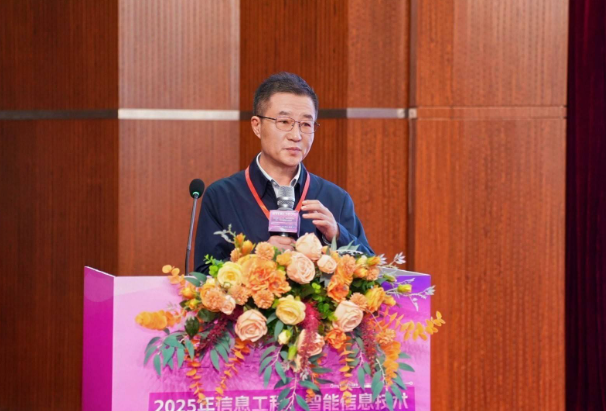
III. Conference Summary: Building a Cross-Regional Platform to Empower Future Development
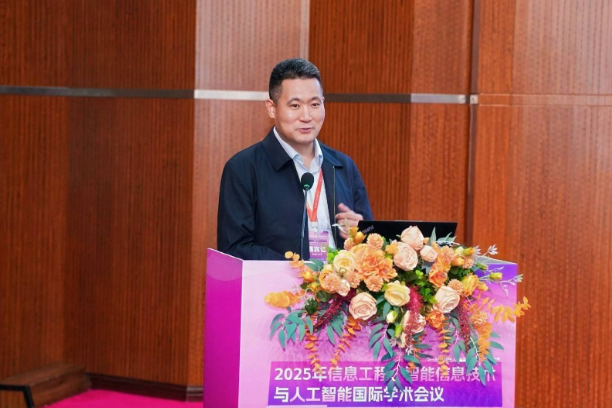
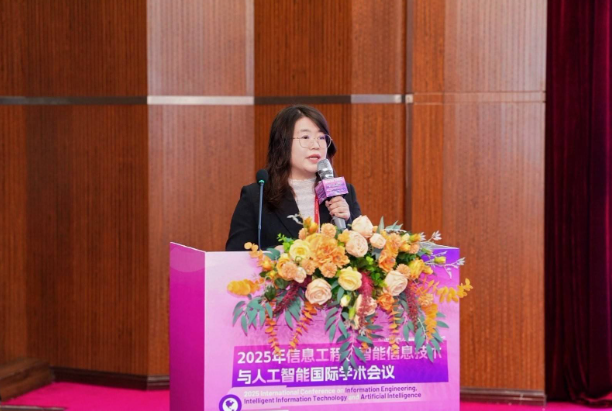
Professor Feng Yan, Vice President of Harbin Institute of Petroleum, delivered the conference summary. He stated that as a major international academic event focusing on the frontiers of information engineering and AI, IEITAI 2025 not only established a high-level dialogue platform that “connects north and south, and bridges industry and education,” but also brought together the wisdom of top global scholars and industry experts, effectively fostering collaborative innovation of intellectual resources across regions and building a solid bridge for technological exchange and industrial cooperation. The conference focused on cutting-edge fields such as information engineering, AI, big data, IoT, and 5G/6G communications, showcasing original breakthroughs in these key areas in China while also delving deeply into practical pathways for empowering traditional industry upgrades and reshaping higher education systems with intelligent technologies. The consensus and outcomes reached at the conference will further contribute to building an open and innovative academic ecosystem, cultivating future-oriented high-level talent, and exerting a positive and lasting impact on the implementation of national development strategies.